

In Issue 013, I’ll share a conversation with close friend and collector Natalie C. Leonardi, along with a closer look at the inaugural residents of the 8 Vine Yard Residency. This exciting cohort of sculptors, installation artists, photographers-painters, and a newly formed collective is pushing the boundaries of materiality, narrative, and space. Their diverse practices align with 8 Vine Yard’s ethos of experimentation and cross-disciplinary dialogue, contributing to a dynamic, evolving creative environment.
I’m also thrilled to offer a rare glimpse into Natalie’s approach to collecting, guided by intuition, personal memory, and deep artist engagement. Her insights demystify the process and reveal the cultural narratives shaping her collection.
In Conversation with Natalie C Leonardi
“I think in this collection we are defining what it is to be an accomplished lady”
I’m excited to share my conversation with Natalie C. Leonardi, a collector whose approach to art is defined by intuition, personal memory, and a deep connection to the artists she supports. Natalie’s insights provide a rare look into the motivations behind her choices and how she navigates the dynamic art world.
We’ve known each other for four years, and I’ve had the privilege of seeing Natalie’s collection evolve, particularly her focus on female artists who challenge traditional narratives. Her collection reflects not only her Venezuelan heritage but also her commitment to materiality, memory, and identity. Many of the artists she collects are those I’ve worked with, which makes this discussion all the more meaningful within the context of my own curatorial practice.
Exploring the Collection
Q: What first inspired you to start collecting art? Was there a particular moment or artwork that sparked your journey as a collector?
I started buying art while studying at university in the U.S. It was a way to cope with homesickness—grounding myself by filling my walls with pieces that brought a touch of tropical Venezuela to cold Philadelphia. I grew up in a beautiful home, where my mother, an avid gardener, filled our space with art and nature. Though my parents weren’t collectors, we were surrounded by beautiful works, mostly rural scenes by Venezuelan painters, some of which are now part of my own collection.
I began collecting about four years ago after attending the Slade degree show, where I was mesmerized by Amy Steel’s floating boob islands in pink and orange hues. I wanted to buy her work on the spot, but having just moved to the UK, I couldn’t justify the expense. A year later, I saw her solo show at Soho Revue, and that’s when my collection truly began. Maybe one day, I’ll have the chance to bring that floating boob land home!
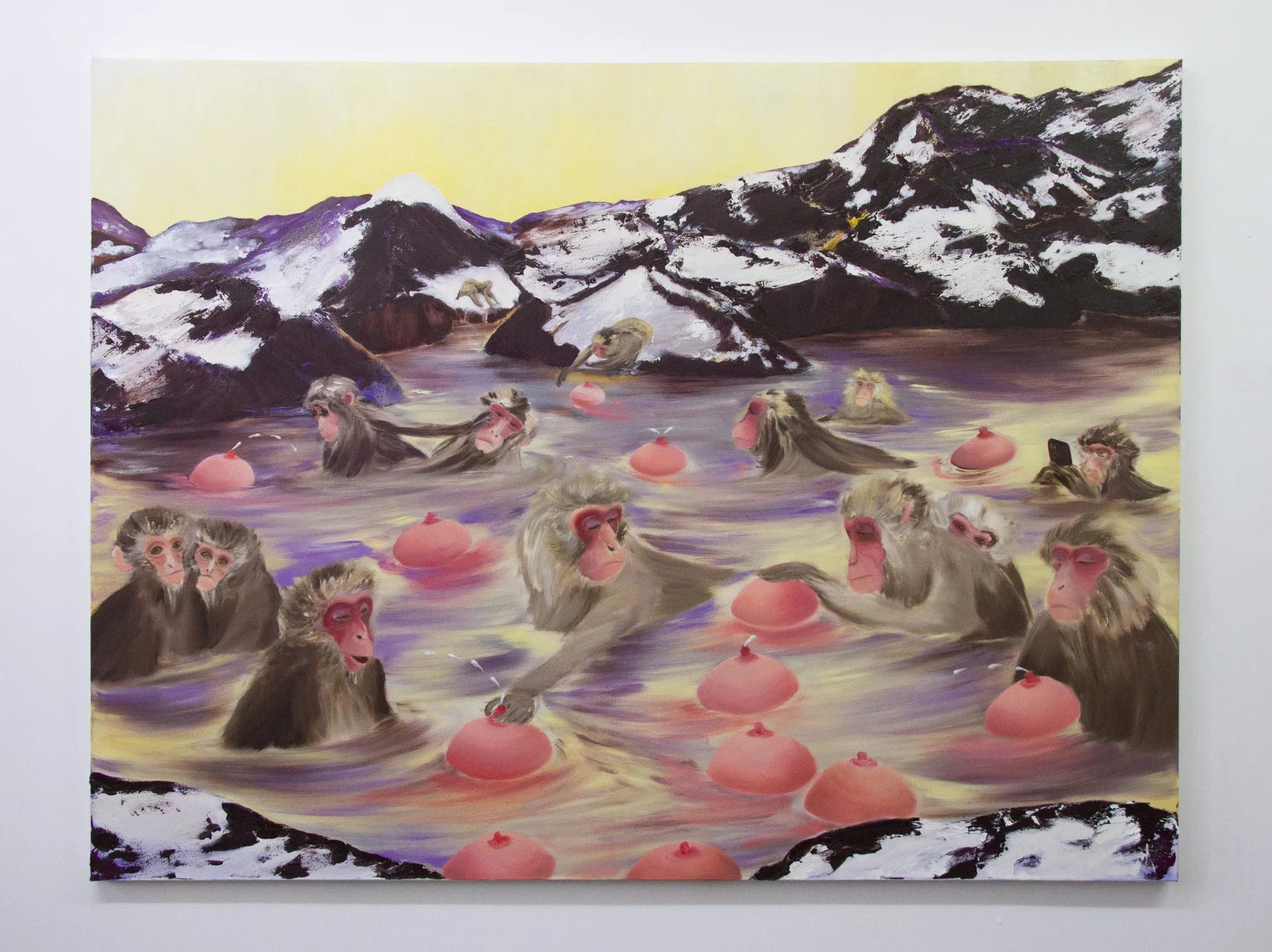
Q: Do you have a specific ethos or guiding principle behind the works you collect? Is there a particular message or emotion you want your collection to convey?
I only recently started seeing these works as part of a collection. They’re no longer just individual pieces but a whole, greater than the sum of its parts. There’s a sense of both familiarity and discovery in them. Looking at the threads that connect each piece, I realize this collection is far more autobiographical than I ever intended it to be. It’s about personal connection, memory, and nostalgia and not just about aesthetics but about weaving together the familiar and the unfamiliar.
Q: Your collection predominantly features female artists. Was this a conscious decision from the start, or did it naturally evolve in that direction? What do you think female artists bring to contemporary art that particularly resonates with you?
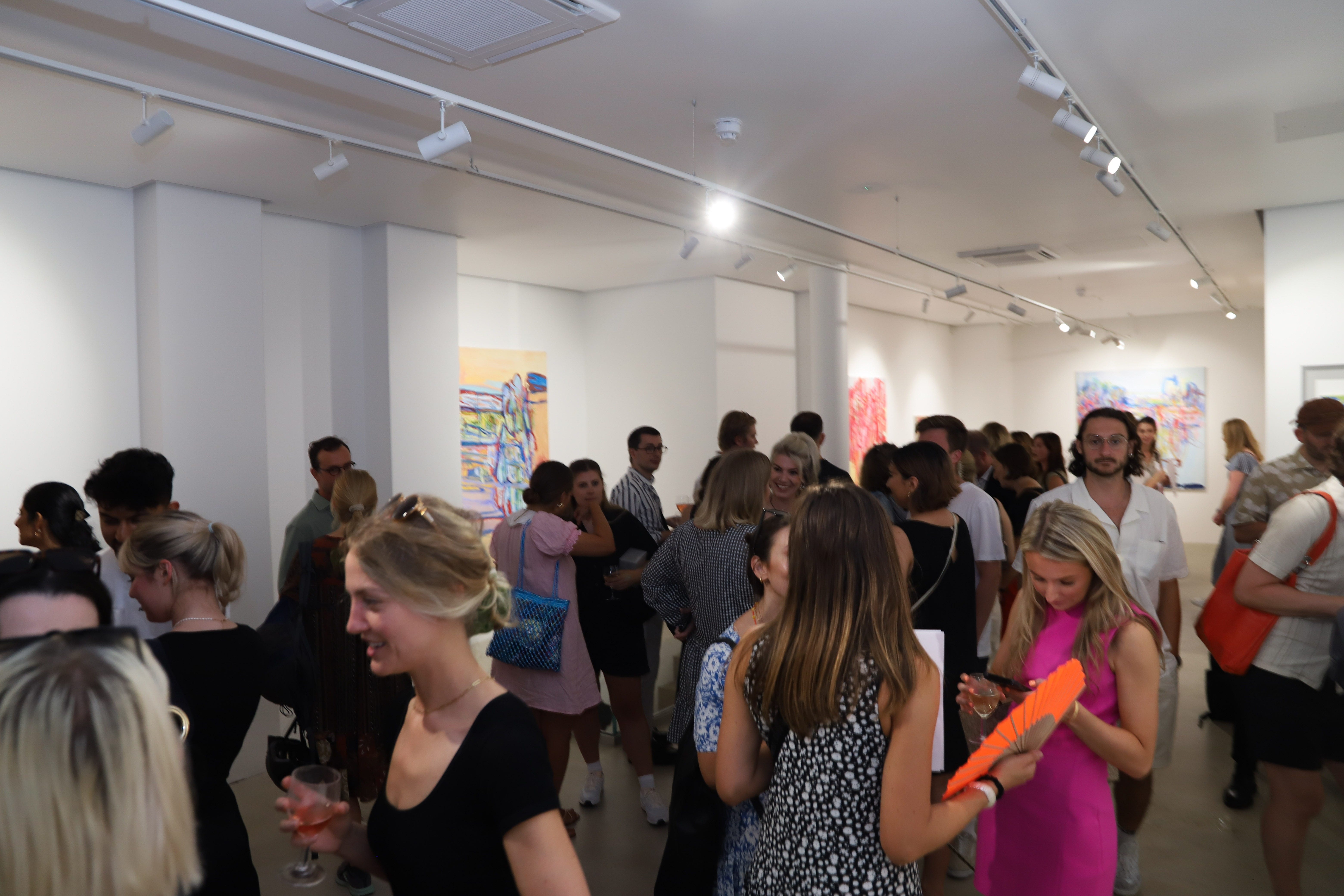
Collecting female artists wasn’t a conscious decision at first, but in hindsight, it makes perfect sense. As a Chemical Engineer in a male-dominated industry, I’m used to being in the minority. I remember attending a Private View at Pictorum for a show you curated—it was mostly women in the room. I felt a strange but uplifting sense of recognition and even pointed it out to the people I was with. It made me think, Wow, imagine if this is what working felt like!
Q: When considering a new acquisition, what factors influence your decision? Is it purely emotional, or do you also think about historical and market significance?
I avoid impulsiveness in my acquisitions. I start by liking a work, then research the artist’s practice—reviewing their CV, interviews, and past shows. I follow their work for a while, looking for innovation, evolution, and discipline. Sometimes I wait years before buying, due to budget or the search for the perfect piece. Occasionally, I find that an artist no longer resonates with me in the same way. This process can be stressful, as choosing one artist means passing on others. But I have no regrets, as my careful curation ensures my collection feels intentional. I trust my instincts over market trends and focus on building my collection, rather than resale. Historically, I’m drawn to artists who have lived through significant moments—like Johanna Seidel, who experienced post-reunification East Germany, or Francisca Sosa Lopez, whose work centers on the Venezuelan migratory crisis. Art, to me, is a powerful way to convey empathy, telling stories and emotions that words alone can’t express.
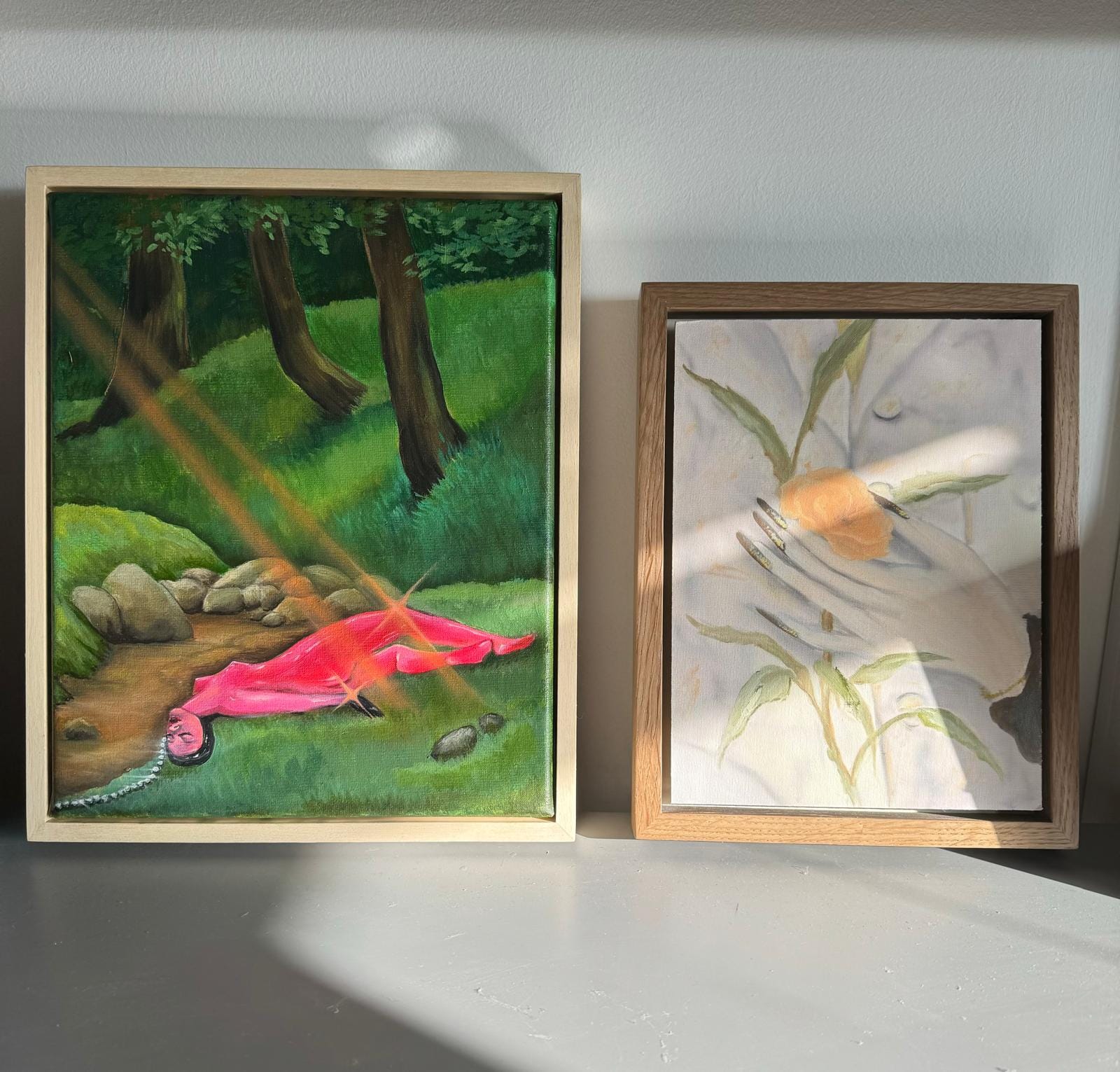
Q: Several artists in your collection challenge traditional depictions of femininity and power, like Amy Steel and Faye Eleanor Woods. What do you think these works contribute to the broader conversation about gender and identity in art?
The idea of a "female" gaze or identity often oversimplifies something incredibly diverse. With 3.95 billion women on Earth, each with unique experiences, society reduces this complexity to narrow definitions. The women in my collection challenge these stereotypes, bringing individuality and depth to the conversation around gender and identity. I admire how these artists reclaim traditionally "feminine" themes—flowers, pinks, embroidery, intimacy—and reinterpret them on their own terms. They turn what society might consider "stereotypically feminine" into something powerful, intentional, and deeply personal. As Faye Eleanor Woods’ piece I Deserve to Make a Scene! boldly states, this is a defiant, creative act. The passage from Pride and Prejudice comes to mind, where the idea of an accomplished woman is narrowly defined by Mr. Darcy and Miss Bingley. In response, Elizabeth reminds us of the absurdity of such rigid standards. In this collection, we’re redefining what it means to be an accomplished woman.
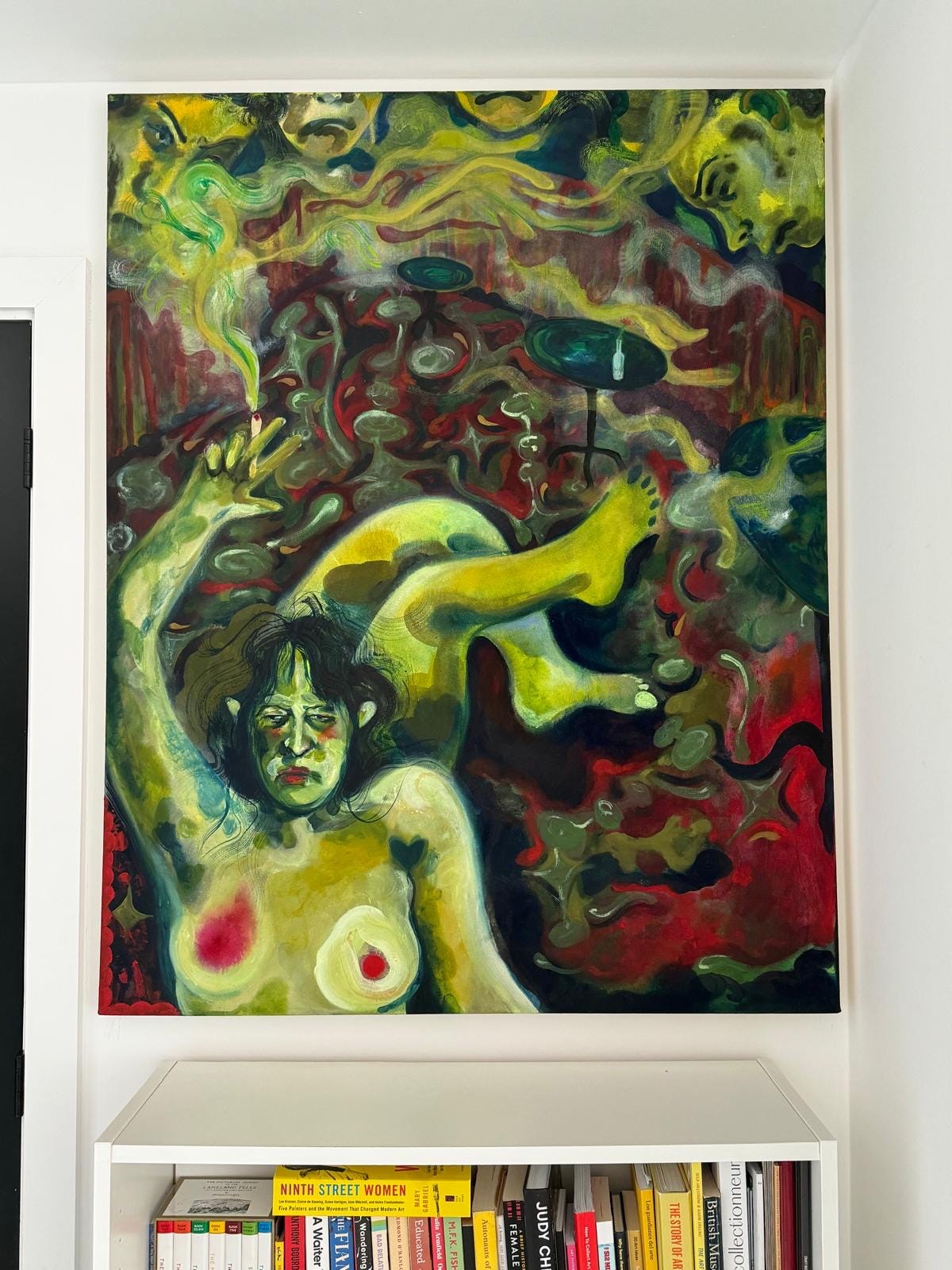
Q: Displacement and nostalgia feature prominently in works by artists like Francisca Sosa López and Jo Dennis. Do you have a personal connection to these themes, and how do you see them reflected in your collection?
I left Venezuela when I was 17, and likely never to return. The first grief I experienced was for my home—never to belong again, and never to find the country I grew up in. Francisca’s work addresses the Venezuelan crisis head-on. The titles of her works, the themes, and her recent exploration with embroidery and clay, take me home. They resonate with my own experiences and connect me to the feelings of loss tied to the place I once knew. I began following Jo Dennis’ work when I encountered one of her tent installations, it reminded me of a warm field trip to Ron Santa Teresa (I’m not much of a camper, so this must be one of the few times I’ve ever slept in a tent). Jo Dennis’ Orange Smiles can be seen as an uplifting work with a blue sky and bold orange brushstrokes, but I feel a sense of nostalgia in the lighter pastels and the negative space. Not sinister but rather, an insightful way of how we fold grief and memory into our self and continue to experience emotions more intensely.


Q: Many pieces you collect blur the boundaries between the real and surreal, from Johanna Seidel’s folklore-infused works to Ornella Pocetti’s science-fiction-inspired feminism. Why do you think surrealism and magical realism resonate so strongly with you?
They are both such an integral part of Latin American culture. Surrealism delves into the imagination and the mind, creating worlds that defy logic and reason. In contrast, magical realism is more closely tied to material reality and the everyday, an integral aspect of Latin American literature and culture. With our resources so scarce, the most ordinary events feel surreal. In Venezuela, a majority Catholic country steeped in tradition and superstition, ‘witchcraft’ - brujería or santería – is often overlooked but has also woven itself into the fabric of the culture. De que vuelan, vuelan.
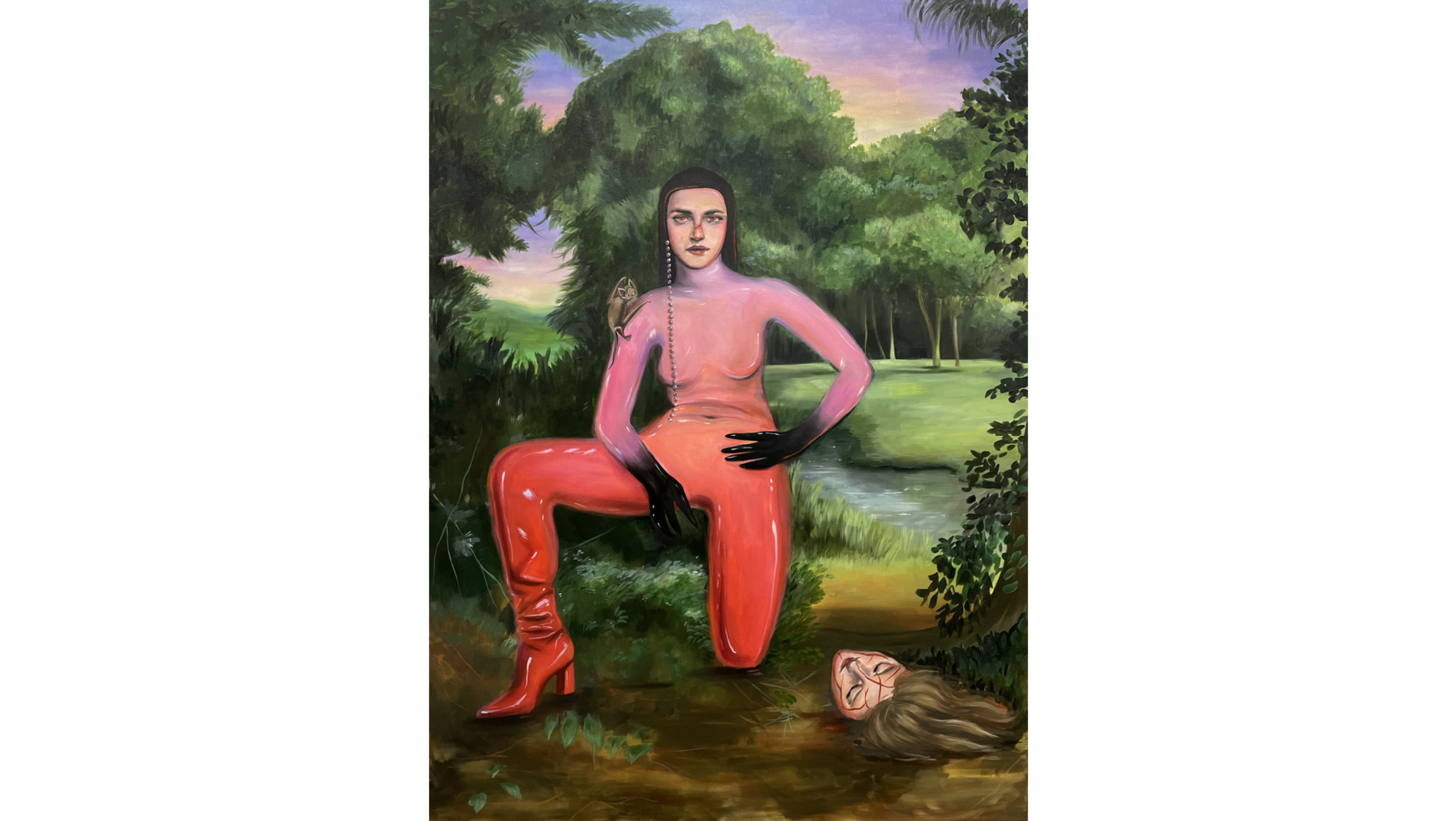
Q: If your collection could speak, what would it tell us?
If my collection could speak, it would tell a story of longing, identity, and connection—of home, not just the one I left behind, but the one I’ve built through art. It would reveal my fascination with artists who reclaim and reinterpret traditionally feminine themes, and my deep appreciation for work that balances intimacy with boldness.
It would also tell of evolution, from instinctive choices to a more reflective process, embracing both the pieces I own and those that got away. Most of all, it would tell a story still unfolding, shaped by the artists I engage with, the conversations I have, and the works I’ve yet to discover.
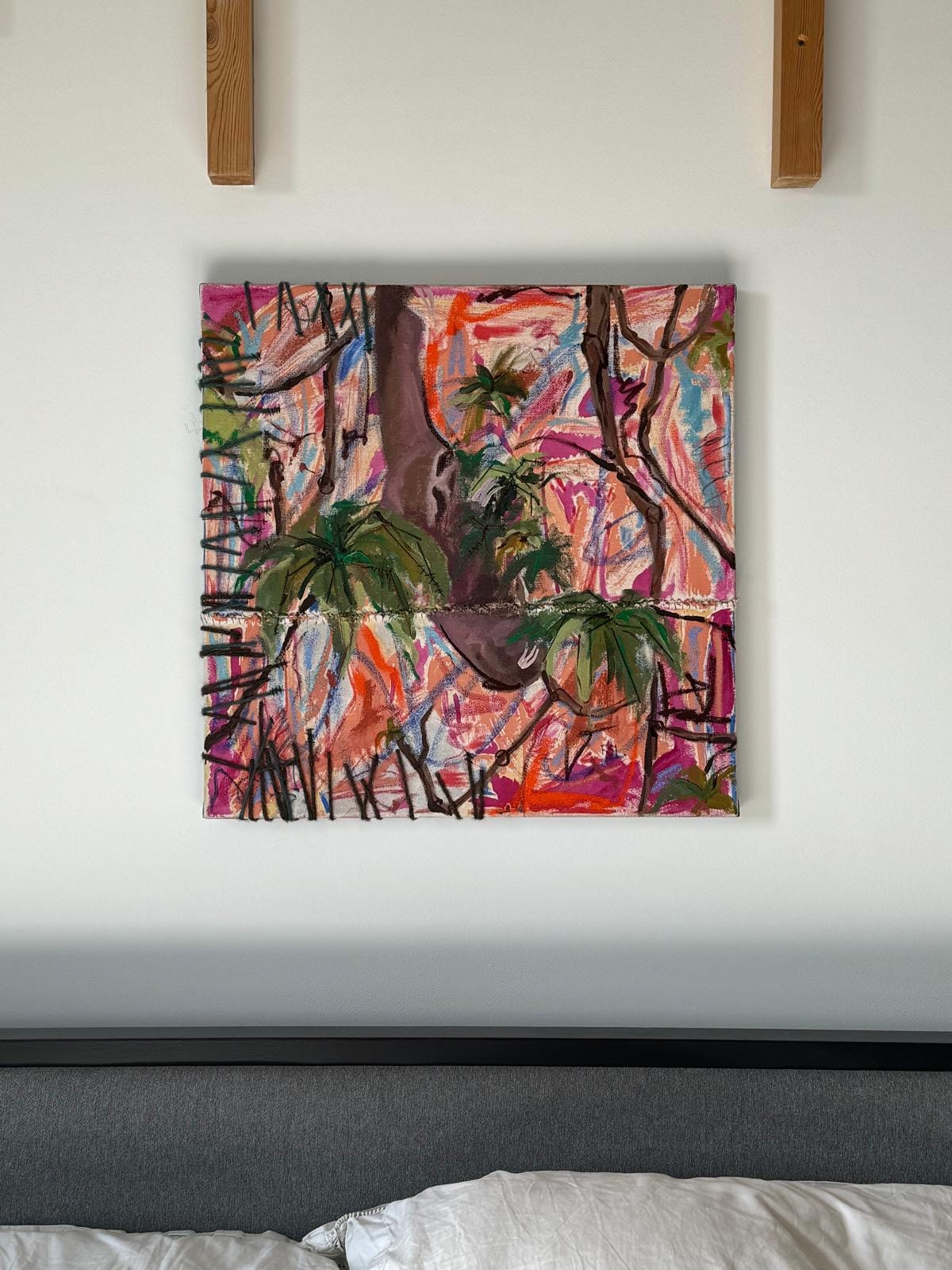
Q: How has your perspective as a collector evolved over time? Are there any artists you wish you had acquired earlier?
There are artists I wish I’d acquired earlier, but part of the process is accepting those that got away. It’s interesting to reflect on why we feel the need to own a work in the first place. Collecting doesn’t always mean ownership—it can be about experiencing a piece in a museum or exhibition, engaging with it meaningfully, and letting it leave an impression without needing to possess it physically. Realizing this allows me to take my time and pass on offers that might not be right for me at the moment. That said, I’d love a large canvas by Daisy Parris on my walls. As much as "visceral" is overused, it’s the only word that captures her portrayal of grief—it hits me every time. Her work taps into something raw and emotional, lingering in a way few pieces do. It’s also beautiful. I also regret not acting sooner on a work by Pia Ortuño in one of your shows at Pictorum—it sold before I could make up my mind!


Is this also where I say that my platonic artist is Louise Giovanelli. I can’t decide whether I’m more drawn to her curtains or her portraits, but I love her adept use of colour to convey weight and texture. I also love her subversive sense of humour and the way she overlaps themes of the erotic and the religious.
Q: Do you engage directly with the artists in your collection? How important is that relationship to you as a collector?
Yes! This is so important! I have met almost all the artists in person and all through social media. The power of social media in fostering direct connections with artists is incredible. Being able to message artists whose work you admire or authors whose books you’re reading, and receive a response, is such an enriching experience. It creates a more personal connection to the art and the creative process, and you get to engage with them in ways that feel so genuine. It’s also a wonderful way to learn more about the stories and perspectives behind the works in your collection. I learnt about Lydia Hamblet’s trip to Sri Lanka with her dad which inspired the work on my walls.
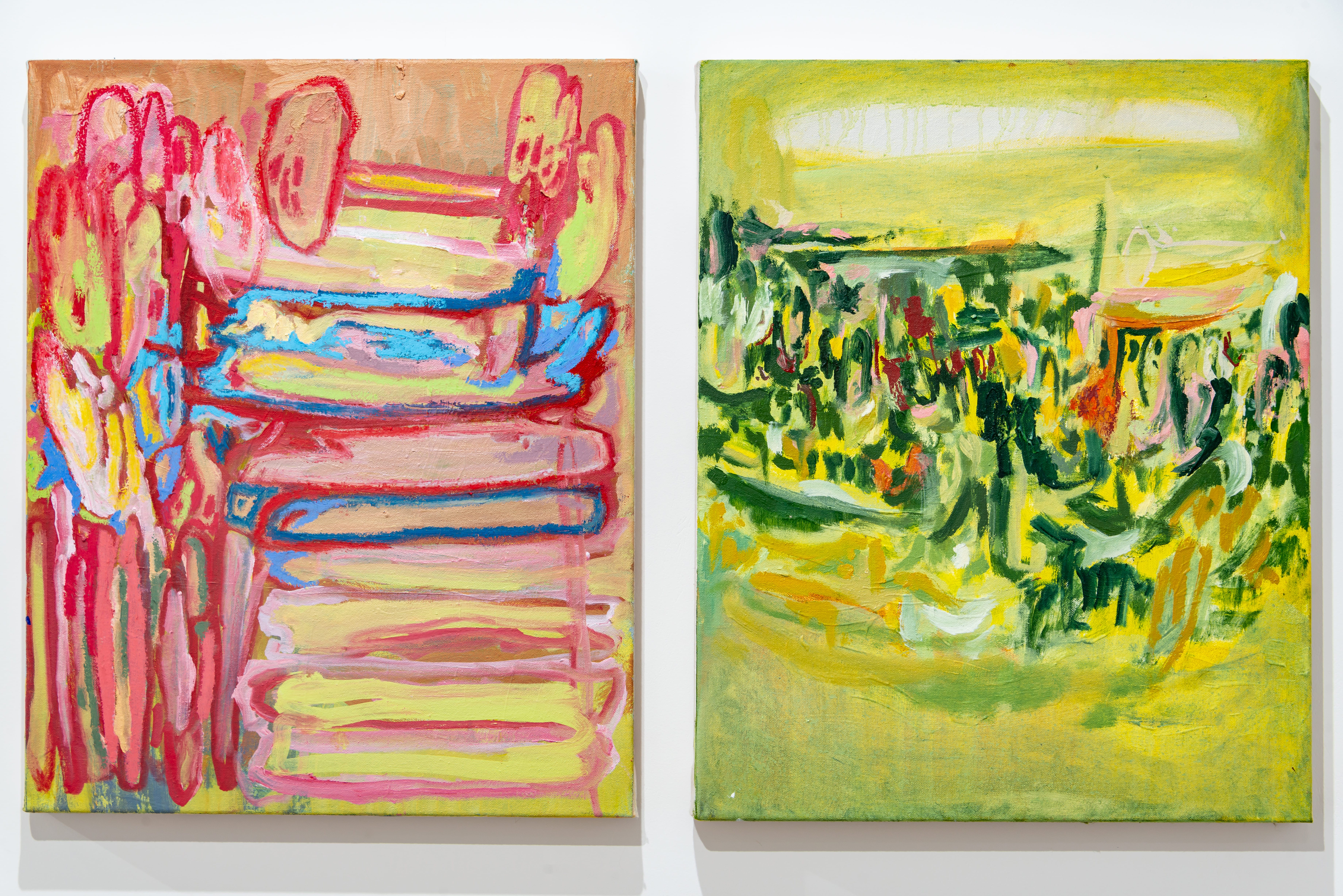
I don’t think I’m particularly good at separating the art from the artist. But this is one of my favourite things about collecting, the women in my collection are extraordinary and they are perhaps my most important art teachers. I often think about how much I would love to have multiple works from the same artist to capture their evolution- I love being a witness to this and celebrating their success. I also enjoy sharing the other artists I have in my collection with them; I think it’s a common thread that connects all of us on some spiritual plane.
Q: What advice would you give to someone looking to start their own collection, especially if they want to support emerging or underrepresented artists?
1. Go to many shows in galleries and museums. Don’t be afraid to ask for catalogues or price lists at galleries. Don’t be afraid to turn down offers
2. Engage with artists on social media and attend their degree shows so you can connect in early stages of their career
3. Don’t collect names – don’t use this as a tick box exercise to collect lesser quality works by big names. It is more rewarding to collect exceptional works by lesser-known artists
4. Be financially responsible. Art is not a liquid investment. Consider your liabilities and then set a yearly budget for yourself.
5. Be patient - there’s no rush. Enjoy the process of discovering new artists, learning about different styles, and watching the growth of artists you’ve supported.
6. Find curators and galleries that you trust. Ask artists which galleries treat them well and pay them on time
7. Practical advice: Keep high resolutions photos of your works, an excel file with each work’s information – year, price, size, provenance. Save invoices, save certificates of authenticity. When you have collected a few works, start a live document on why you collected them and identify the threads that run through your collection.
8. Have fun
Q: What’s next for your collection? Are there any artists, themes, or movements you’re particularly excited to explore?
I’d love to diversify into sculpture but being such a nomad makes it tricky. I’d be too afraid of collecting anything too fragile. I’d love to dive deeper into conceptual art. Amalia Pica comes to mind as someone whose work really interests me.
I’m also enjoying abstraction; I’ve noticed that even the figurative works in my collection have degrees of abstraction that my eye is drawn to. There’s no strict roadmap, just an openness to discovering what resonates next and following up with the artists on my radar. There could even be a man in this collection by the end of the year.
8 Vine Yard: Meet the Residents
The 8 Vine Yard Residency has now been underway for two weeks, running in parallel with at the edge of all things, the exhibition showcasing works by Annie Trevorah, Anna Woodward, and Vilte Fuller. As the residency takes shape, I’m excited to introduce you to the talented resident artists and share a sneak peek into three of the four studios, showcasing some beautiful works in progress. This residency is an integral part of our space, offering artists time, freedom, and a supportive environment to experiment and grow—an opportunity to push creative boundaries and engage with the rich, evolving dialogue within the exhibition.
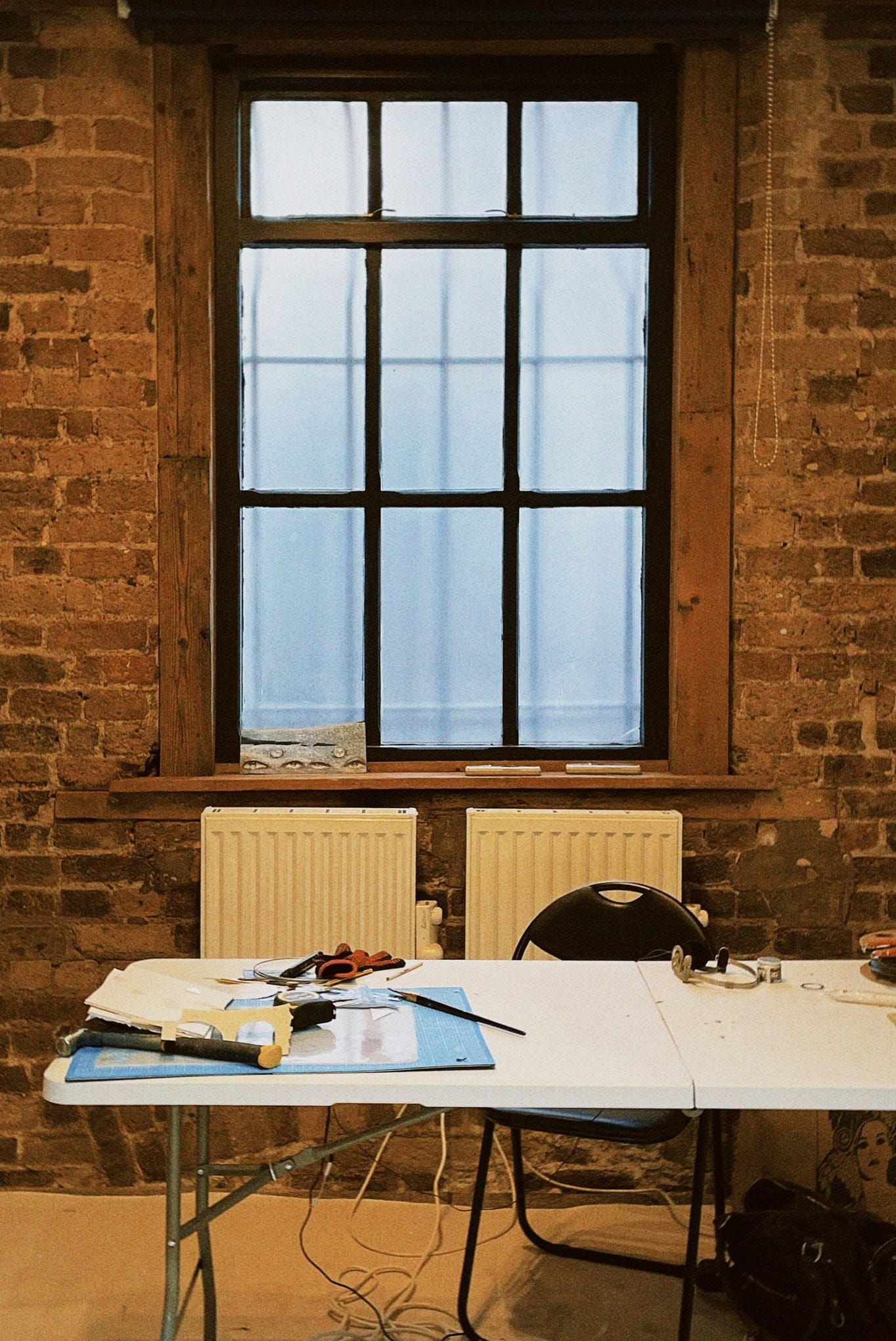
If you would like to come visit any of our residents, please feel free to reach out.
STUDIO ONE: Ghazaleh Avarzamani
Ghazaleh's multidisciplinary practice spans sculpture, installation, and video, challenging hegemonic power structures. Her work explores the tension between reality and play, often referencing game systems and cultural manuals to question educational methodologies. Through play, she activates a complex process of social and political influence, opening up radical possibilities for subversion and pleasure. During her residency, she’ll develop research for upcoming solo exhibitions at the Hayward Gallery and Delfina Foundation in 2025.


STUDIO TWO: Zayn Qahtani
Zayn’s work explores materiality and storytelling through drawing, painting, and sculpture. Using handmade papers, bioplastics, and natural pigments, her pieces feel unearthed, like relics of a personal, synesthetic archaeology. At 8 Vine Yard, Zayn will experiment with scale and new materials while deepening her exploration of alchemical processes and intuitive mark-making.


STUDIO THREE: Sam Llewellyn-Jones
Sam’s work intersects photography, sculpture, and painting, exploring landscape, time, and the tension between natural and man-made environments. His layered approach blends photographic elements with painting, capturing both the transient and historical aspects of place. At 8 Vine Yard, Sam will create a new series of large-scale works, continuing to push boundaries in his exploration of memory and landscape.


STUDIO FOUR: DİL Collective (Duru Bebekoğlu & Yasemin Günhoş)
DİL Collective, rooted in Turkish heritage, uses language as a vessel for identity and belonging. Their work spans installation, multimedia, and performance, exploring how language shapes culture and thought. Duru draws on storytelling and Turkish cuisine, while Yasemin delves into digital and physical identities. During their residency, they’ll create large-scale interactive works, exploring language, migration, and collective memory.


As this edition is a bit longer than usual, I want to thank you all for reading this far and wrap up here. It’s safe to say that, as always, the ‘Contributions’ have already been felt through Natalie’s kind words and the insights shared into the four residents of 8 Vine Yard.
As always,
Thank you for reading!
J x